—> Growing Up with Lucy, Steve Grand
All About What I Do
—> Growing Up with Lucy, Steve Grand
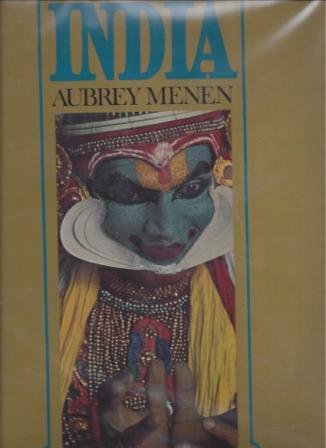
Book review “India, Designed and Photographed By Roloff Beny with essay by Aubrey Menen.” First published 1969.
The book primarily comprises various photographs taken by Canadian photographer Roloff Beny during his visit to India with legendary art collector, Peggy Guggenheim. Recently, I completed Peggy Guggenheim’s autobiography – Out of this Century. Within this book, she describes her incredibly pleasurable journey to India alongside photographer Roloff Beny. Upon completing “Out of this Century,” I immediately got this book. The reason to get this book was to remain more in the company of Peggy Guggenheim. But what I received was a shock, though of a very readable kind.
Among the photographs of various places of India shot by Roloff Beny, the book includes an essay on India and Indians by author Aubrey Menen.
Menen has an irreverent take on India and Indians. I cannot compare India and Indians with any other country, for I have never lived in any country. But I’m aware of the sociological and cultural issues which India faces, for example, the Caste System, underdevelopment and poverty. What Menen writes, though caustic, it’s true and still true.
To understand Indian quirks, customs, and, above all, thoughts and attitudes, one should read the essay by Menen. For Indians, these are not big deals. But the fun lies in the author’s articulation.
At first I thought the author had a racist attitude towards all things Indian. But I was surprised to learn that the author, Aubrey Menen, is half Indian, his father from the state of Kerala in India and an Irish mother. He was born a “Menon” and later replaced the “o” with an “e.”
The author, a trained British journalist, has written the prose which flows. It’s never a dull moment as one reads his stories about India, even though, as an Indian reader, I felt his several kicks on my butt right till the end.
I quite enjoyed the attention.
The essay starts near India’s Independence, i.e., 13th Aug 1947, and immediatly lets into an event which no one may know in India. Portion of the book which mentions the event is appended.
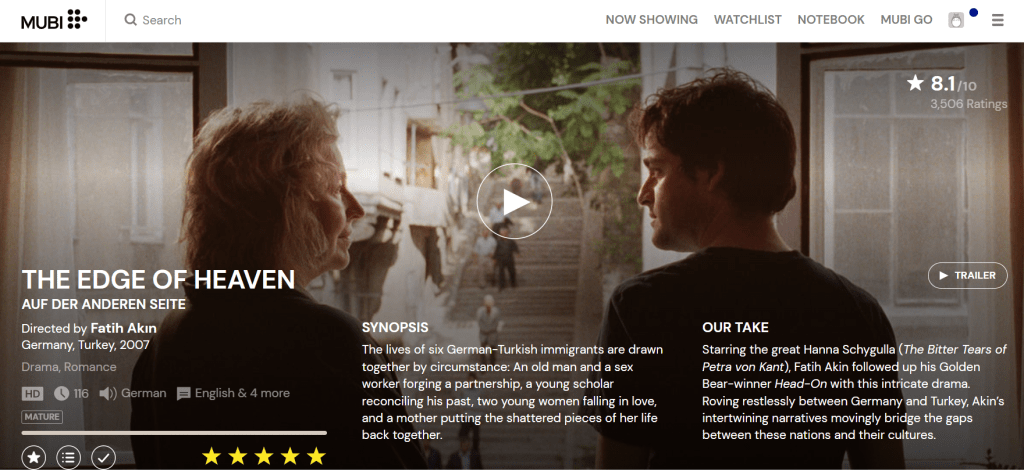
This is the first movie in which I came across a unique craft – seamless flashback.
One can imagine the story like driving on the road for a while and then taking a U-turn. So, while driving one way, the driver will get a view, and after the U-turn, the driver will get the same view, but different perspective. The Point of View changes.
Again, if the driver, while driving up a road, sees an ongoing murder by the side of the road, so, after U-turn, the driver will view that event again from the other side of the road. Well, not exactly the same event but an aftermath, but a murder none-the-less.
The movie blends the story’s forward movement with flashbacks. This method of storytelling becomes clear later in the story when there is a “U-turn” – a time in the movie, a scene, at which a discerning viewer will know that, from now, the story is moving backwards in time and is filling the gaps between certain key past events.
The movie THE EDGE OF HEAVEN features Turkish, German, and some English languages, and it takes place in both countries. There are traces of cultural friction also depicted in the story.
It is a refreshing watch. One expects after story’s “U-turn” that certain key characters should meet. But the story is naughty in not letting it happen. Yet, the ending is peaceful.
The movie #Oppenheimer is a 3-hour long collage – random newspaper cutout, pasted on a reel and then, and as if this was not enough, the narration was further compounded by periodic back and forth in story time-line, and again, as if this was not enough, color and black and white scenes at periodic intervals were added into the mix. The final result is one big disarray.
It is understood that a movie about the making of the “Nuclear Bomb” is much too complicated for the lay audience, but then, why add to the confusion with assorted news clippings randomized over the movie timeline?
At the end of it all, no justice was ever done to any of the characters. Most of them are long dead to really bother with this messy attempt to tell their story.
If you have not seen Oppenheimer, skip it. You haven’t missed anything.
Now moving on to the other over-hyped bonanza – Barbie which hit theaters alongside Oppenheimer and thus created the portemantau, – BARBENHEIMER. The movie Barbie is a good attempt by the moviemaker to create an alternate thesis around the cultural significance of the Barbie doll.
The movie is well crafted and has an engaging story. But the only weak point is that it tries to be philosophical at junctures, and in those moments, the dialogues are not convincing.
What Barbie needed was better writing. Because when one is delving into philosophical waters, one needs to be simple and exact and also prepare the audience for a dose of Proust.
Compared with Oppenheimer, Barbie is a better watch.
I must admit that when it comes to education, I consider myself incredibly fortunate to have attended St. Mary’s School, Dum Dum, for five years. However, it was not the school itself that made the difference, but rather the exceptional teachers I had. Our school was managed by devoted Christian missionaries, particularly the Irish Christian Brothers, whose teaching standards were unparalleled. Even after going through junior college and university in Mumbai, I never encountered teaching at the same level as I did in school.
This reflection on my education came to mind when I read about BYJU, the struggling self-learning/online education company. Anyone who has experienced self or online learning knows that it’s not as simple as it may seem.
I still recall BIJU’s advertisements on TV during the COVID lockdowns in 2020 and the media’s enthusiasm about its success and the benefits of studying indoors. Having experienced self/online learning myself over the years, I knew that BYJU’s model was not sustainable.
Coincidentally, while BYJU was on the rise in 2020, the government also introduced its New Education Policy, and these two unrelated events led to the widespread belief that online learning is the way forward. This inspired me to share my thoughts and experiences with self and/or online education on my blog in 2020.
“Open” and “Online” do not imply that it’s “Easy.” Self-learning requires tremendous discipline to complete even a single module of a course, and many people may struggle to finish. I have experienced this firsthand.
Self-learning, including online learning, demands an environment that is unfortunately lacking in most Indian households.
–>Is there a dedicated study room?
–>Do students have access to proper equipment?
–>Are children disciplined enough at home to follow the curriculum?
–>How closely are parents supervising their children’s studies versus leisure activities?
As one can imagine, self-learning comes with substantial monitoring costs and a steep learning curve for most Indian parents. If parents had received better schooling and understood effective pedagogy, they would know that students, especially up to class 10, require real classroom interactions with teachers and peers.
However, I believe that online and self-learning should be introduced as a subject in class 8, gradually initiating students into a “teacher-less, class-less, and student-to-student forum” environment so that by class 10 or 12, they can confidently pursue higher education with self-motivation.
The key here is to ensure that the online space does not isolate students but rather connects them in groups with a shared goal of mastering a subject.
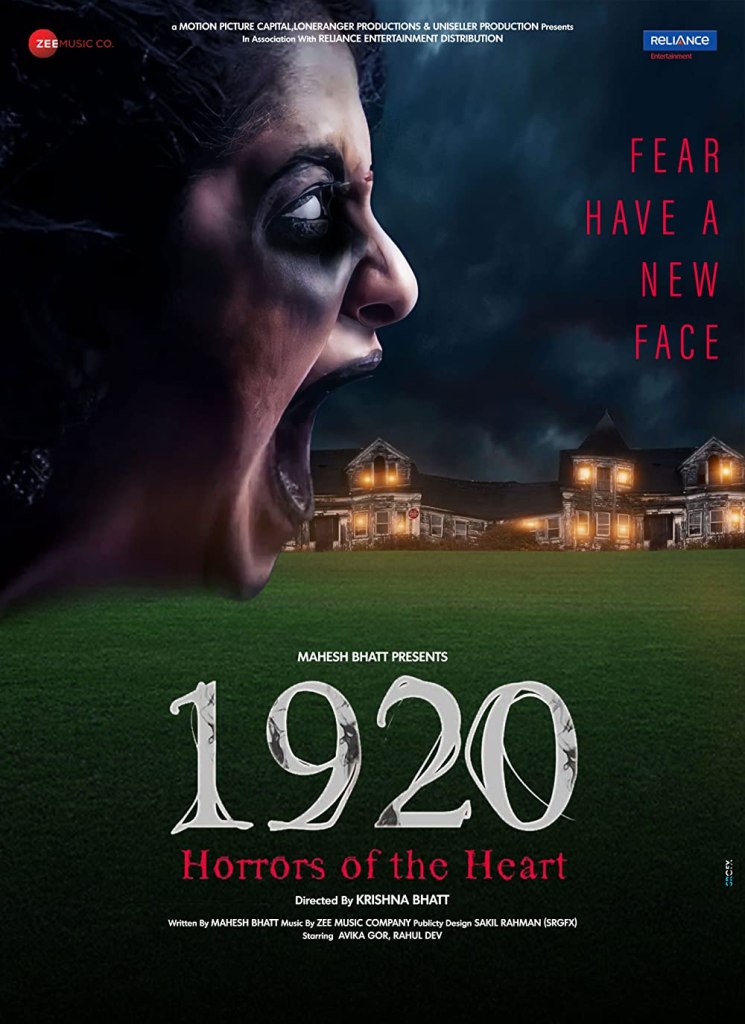
Since the audience has an inkling that this is a horror movie (as the movie title states), they expect horror to happen. Now the skill of the movie makers is to get the script, sound, special effects etc., well attuned to deliver horror when the audience least expects it. Probably, this is the easiest in horror film genre.
The challenge is in sustaining the fear, so that the audience remains scared even between jump-scares. And a successful horror movie is that movie where the people watching such shows go home and sleep with their lights on for a couple of days.
Few jump-scares do not a horror movie make.
The movie “1920: Horrors of the Heart” is a flat show. Any film-maker can manage a few jump-scares. But few jump-scares do not a horror movie make. There should exist a believable, well-executed story delivering the horror.
Well, they try to concoct something for a storyline, but it is all convoluted. I believe the filmmakers may have first decided on those “scare moments” in a 2 hour movie, and then may have connected those moments with thin plots.
Mahesh Bhatt, a filmmaker of repute, has his name on this movie as a writer seems to have shown very little oversight in creating this movie. Krishna Bhatt, who is the director of this movie, is the daughter of another movie maker of repute, Vikram Bhatt. It seems he too had little to contribute.
So, all are in a family. After watching “1920: Horrors of the Heart” one can wonder whether the Bhatts offered this movie as a trial run for the new director.
Some people are in a privileged position to make movies just for the heck of it.
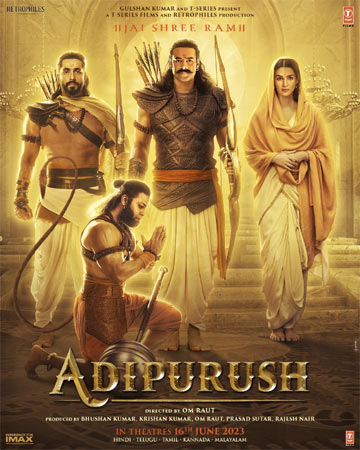
People are misplacing their outrage against the movie Adipurush. In this period of Social Media ‘influencers’ and making money from ‘hits’ – provocation is a lucrative item. So, that is happening. Content makers for social media are inciting outrage for no apparent reason, as there is nothing in the movie to justify such an extreme reaction.
The 3-hour long movie is pretty interesting. And the TV series ‘Game of Thrones influences its filming and special effects. In “Game of Thrones” there are flying dragons. Similarly, in Adipurus, Ravan, the villain, gets to ride a giant bat. This is a creative license. For, in the Ramayan epic, Ravan flies around on a vimana (aircraft) but they do not specify the form of the aircraft in the epic. Hence, in the old Ramayana TV show, they show a wooden chariot kind of thing floating in the sky.
36 years have passed since the original TV series Ramayana (1987). Now new technology should inspire new retelling. As in the old Ramayan show, it will be laughable to show streams of arrows from both sides that meet in the sky and get neutralized. Remember. And today people don’t like to listen to high-flouting talks on morals.
The script is crisp and fast. And the visuals are marvellous.
The makers of Adipurush have lessened much of the melodrama and verbal exchanges. Films about religious epics have a tendency to be exceptionally wordy. This movie is not at all preachy. The script is crisp and fast. And the visuals are marvellous.
Don’t believe in fake outrages. The movie will not disappoint you.
Adipurus uses characters and story-line of Ramayan to create a visual effect. The effort is admirable.
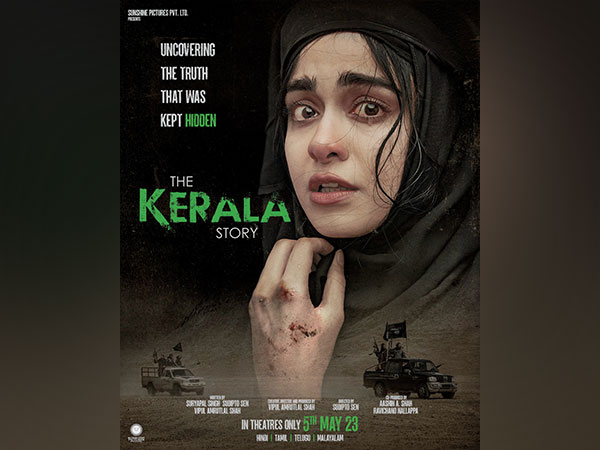
One difference with this movie ‘The Kerala Story’ is, one sees crowds in the theatres. I’m pointing to this now, but soon many will notice, and hopefully complain, that the movie booking apps in certain circumstances behave like a fixed-cricket match. While I was buying the ticket for this movie on the app at noon for a 12:30 show, the app showed an empty theatre. I wondered if I was the only one attending.
But no. There was a sizable crowd to watch The Kerala Story. This experience was contrary to what happened during the Movie Pathaan, where, even though all the seats looked booked online, the auditorium was nearly vacant when I arrived. I’ve heard that Shah Rukh’s upcoming movie Jawaan’s release has been postponed. I believe he needs to give the audience time to recover from the trauma caused by Pathaan’s deceptive selling tactics.
Anyway, back to The Kerala Story.
The Kerala Story portrays the international Islamic plan of employing naive Hindu girls as sexual captives. Islamic clerics teach young Muslim males to control Hindu women, extort them to convert to Islam, and whisk them away on a “vacation” where they are kept prisoner to fulfill the sexual desires of jihadist fighters.
Those who need validation on the idea that Muslims are worse and Hindus are great will find this movie satisfying.
Depth, substance and balance are a necessity for any good storytelling. The movie misses out on all the mentioned three fronts, and openly opts for a one-sided approach. Although international jihad is indeed an increasing threat and India is at a critical juncture, adopting a defeatist attitude, as portrayed in the movie, is a feeble response.
I belong to the North of India and there are talks about Love-Jihad. Yes, Love-Jihad exists. But one should know why it exists. In North India, a Hindu wedding of a girl drives the father and the family into penury. The father even takes huge loans to marry off his daughters and remains in perpetual debt till death. Under these circumstances, if some Hindu families can get one daughter married to a Muslim and affordable expenditure, then what is the problem?
The Uttar Pradesh Government has come out with a bill on Love-Jihad – or a Law against forcible conversion. But I hear of no news of Dowry Laws or any promotion of reasonably priced marriages. Mr. Modi is seen on camera sweeping the streets for his “Clean India” campaign. Similarly, the Chief Minister of U.P., should be visibly advocating for modest weddings, and a “clean-custom” campaign.
If Hindu Girls are leaving the religion and marrying ‘outside en masse’ then, in this case, the Hindus have a problem with their own religion rather than some other religion being a problem.
Conversions via Love Jihad could be minuscule. But since it’s a live-wire political issue, the crescendo is more than credible.
Going back to southern India and the film The Kerala Story, what I mentioned above can also be true down south too. There may be social, societal and financial problems arising out of having marriageable girls in Hindu families. I suppose the same problem applies to Indian Hindus throughout India.
Hindus have a problem with the girls’ marriage. Dowry is a problem. So, Hindus (and the government) need to attend to and reform social and societal issues, rather than pointing fingers elsewhere.
The Kerala Story is an uninteresting and outdated experience. When the scene moves to Syria, they should have shown some action. You expect to see terrible things in bad-land, so show me something truly awful. Instead, they show a beheading and a hand-cutting, which you can easily find on the Internet. And the protagonist, Adah Sharma, is always craving for a mobile phone.
The movie ends abruptly. One second I was looking at visuals and the next I had to transition to reading text on big screen. The movie makers had a chance to show the subject in video and sound, but they didn’t do it well, so writing words on the big screen won’t be enough to make up for it.
Creators should show both sides of a story. If there are vulnerabilities exploited, how did those vulnerabilities appear in the first place?
 neerajshrivastav